


Hospitals Are Discharging Homeless Patients Back Onto the Street, and the Cycle Never Breaks
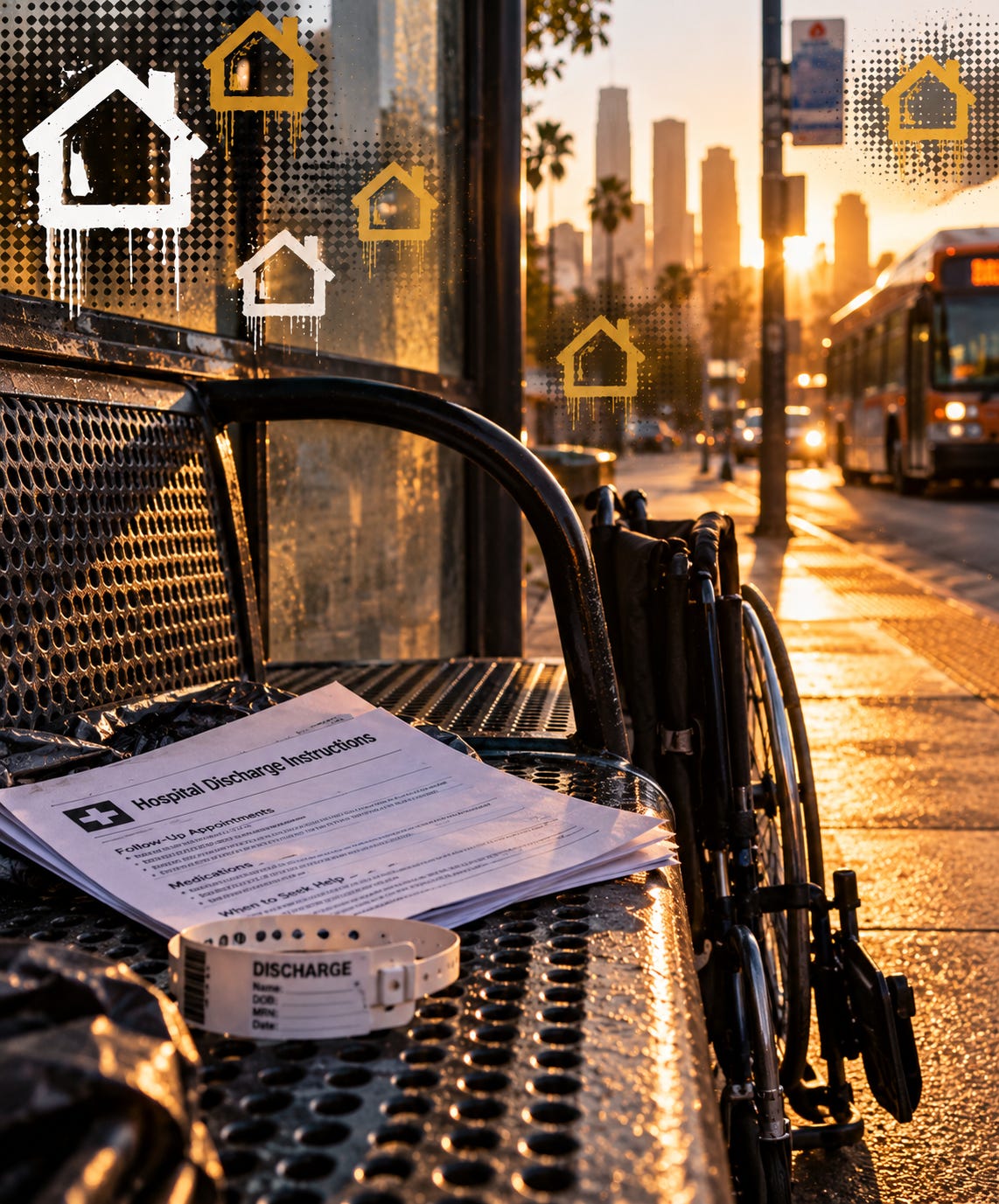
Every year, hospitals across Los Angeles discharge patients who are medically stable enough to leave, but have nowhere safe to go. Some are sent to a bus stop. Some are dropped at a shelter that cannot handle their medical needs. Many end up back in the emergency room within weeks, not because their illness returned, but because a sidewalk or a car is not a place to recover. This is the hospital discharge homelessness cycle, and it repeats itself thousands of times a year in our own county.
IF THIS WORK MATTERS TO YOU, YOU CAN SUPPORT LA CONNEXION DIRECTLY HERE: ☕Support LA Connexion☕
How the Hospital Discharge Homelessness Cycle Works
A patient without stable housing arrives at the emergency room, sometimes seriously ill, sometimes injured, sometimes both. The hospital treats the immediate medical crisis, and once that crisis has passed, the patient no longer meets the criteria to stay in an acute care bed. But “medically stable” does not mean “able to safely recover.” A person managing a healing surgical wound, a new diabetes diagnosis, or a course of antibiotics needs a clean, stable, quiet place to rest and follow through on care instructions. For a homeless patient, that place often does not exist, and the hospital discharge homelessness cycle begins again the moment they walk out the door.
California took this seriously enough to pass SB 1152, a 2019 state law requiring hospitals to follow specific discharge planning steps for homeless patients, including offering a meal when medically appropriate, weather-appropriate clothing, and a documented plan for follow-up care, with a post-discharge destination identified and communicated to the receiving shelter or provider whenever possible. The California Hospital Association has published detailed guidance to help hospitals meet these requirements. The law exists because, before it, the standard practice in far too many cases was simply releasing a homeless patient onto the sidewalk outside the hospital with no plan at all.
Why Discharge Alone Doesn’t Break the Cycle
Even with SB 1152 in place, a documented plan on paper is not the same as a real bed. LA County’s own Transitions of Care program, run through the county’s Homeless Services and Housing division, lays out an ambitious standard for case managers: contact a patient within 24 hours of learning they were hospitalized, complete a home visit within 72 hours of discharge, and get them in front of a primary care provider within two to four weeks. That is a strong plan when it works, but it depends entirely on the patient having a stable address and phone number for a case manager to actually reach them at, which is precisely what a homeless patient often does not have.
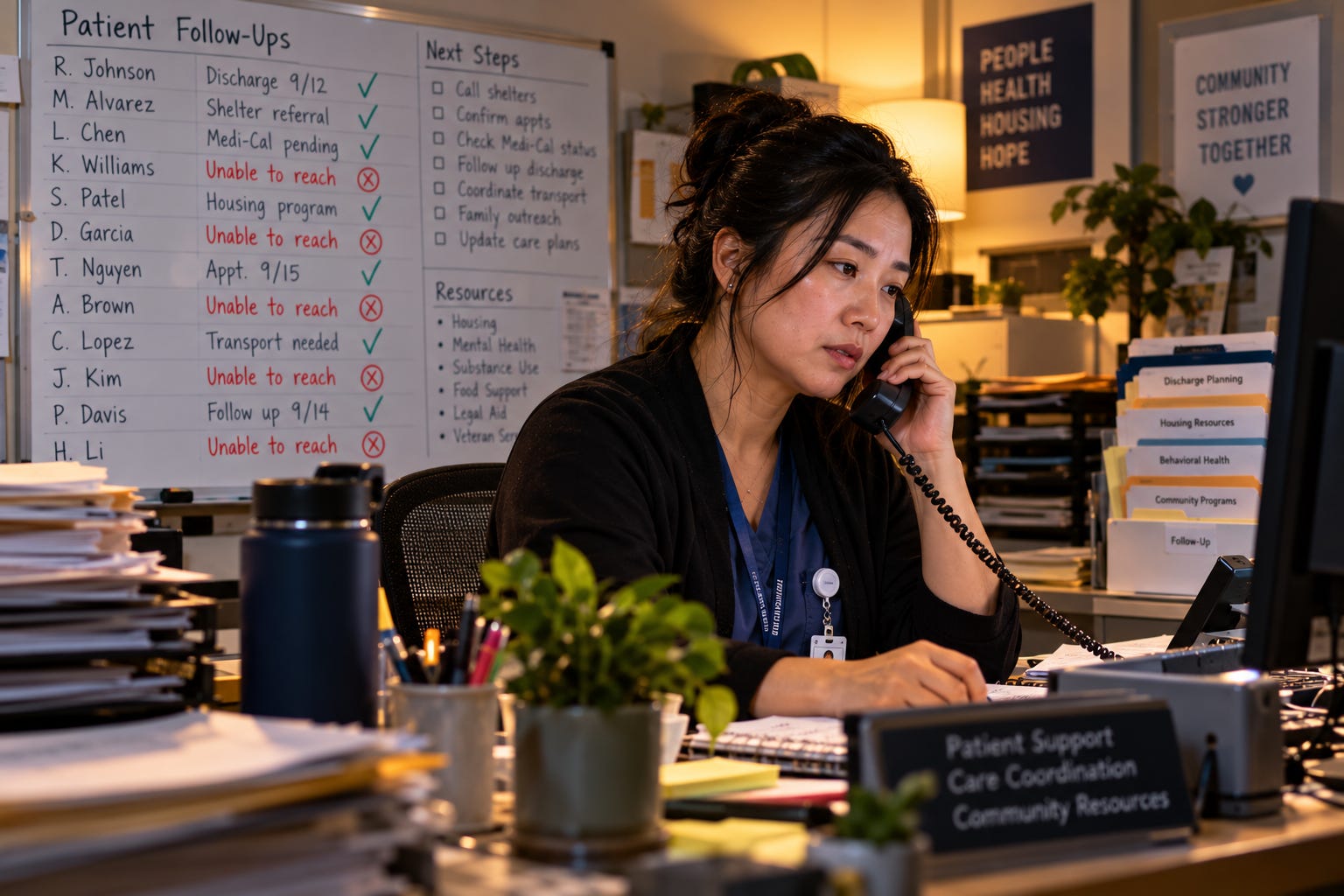
This is where the hospital discharge homelessness cycle becomes self-perpetuating. A patient discharged without stable housing misses follow-up appointments not out of neglect, but because there is no reliable way to reach them and no safe place for them to manage their own recovery. Untreated complications set in. The patient returns to the emergency room, often sicker and more expensive to treat than before, and the entire cycle repeats. Medical respite care, a level of care specifically designed to bridge this gap by providing short-term recovery housing with medical support, exists in Los Angeles, but capacity remains far smaller than the need.
What Actually Interrupts the Cycle
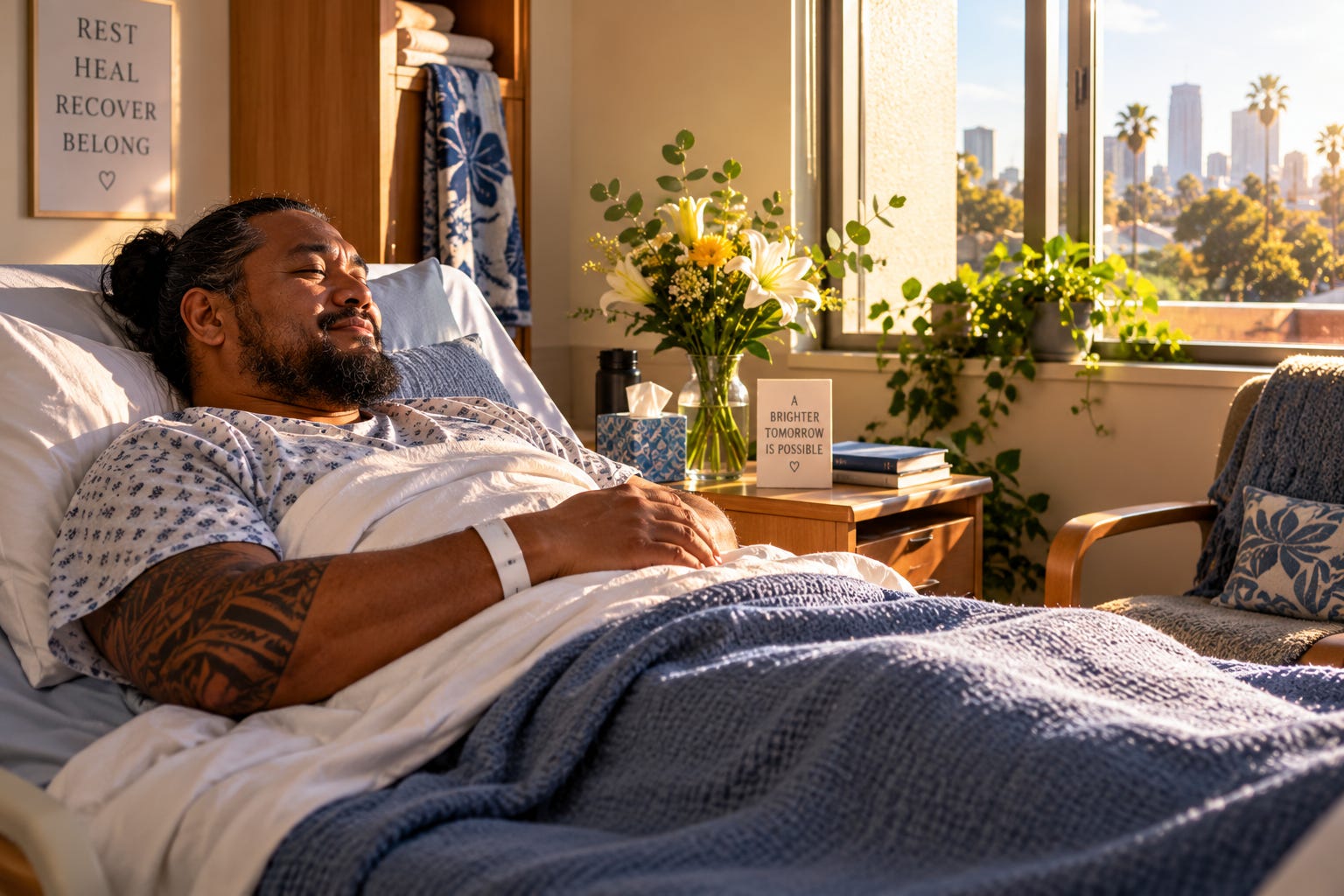
Medical respite care is the single most effective known intervention for the hospital discharge homelessness cycle. It gives a patient a real bed, clean sheets, and often on-site nursing support for the weeks it takes to heal, instead of sending them straight from a hospital bed to a sidewalk. Every dollar spent expanding medical respite beds in Los Angeles is a dollar that reduces expensive, preventable emergency room returns down the line.
If you or someone you know is being discharged from a hospital without stable housing, ask the hospital’s discharge planner directly and by name whether a medical respite bed or a warm hand-off to a case manager is available before leaving, since SB 1152 gives every patient the right to ask for exactly that. If you want to help from the outside, supporting organizations that fund and operate medical respite beds in LA County is one of the most concrete ways to interrupt this cycle before it repeats for someone else.

📌 You Might Also Be Interested In
They Are Not On the Street: The Hidden Homelessness Crisis in Los Angeles
Why Doesn’t Anyone Tell South LA About These LA Safe Spaces?
How Los Angeles Neighborhoods Are Being Erased One Building at a Time
📌 Community Resources
📍 LA County Homeless Services and Housing, Transitions of Care Program
(213) 752-1900, case management connecting recently hospitalized homeless patients to housing and follow-up care
📍 Illumination Foundation (Illumination Health + Home)
www.illuminationfoundation.org
1-888-505-0855, short-term medical respite housing with nursing support for homeless patients after hospital discharge
📍 JWCH Institute
Health care and recuperative care services for people experiencing homelessness across LA County
📍 LA Connexion
Our free community resource guide, (323) 200-9096
📌 Join LA Connexion
The hospital discharge homelessness cycle is one of the most fixable pieces of this crisis, if we fund the beds that actually break it. Join LA Connexion and help us keep telling stories like this one.
📞 (323) 200-9096
The hospital discharge homelessness cycle is one of the most fixable pieces of this crisis, if we fund the beds that actually break it. Support LA Connexion’s reporting on stories like this by joining us here.
And if your business wants a better relationship with the community it serves, reach out. We can help make that happen: laconnexions23@gmail.com or (323) 200-9096.