


The Fear Keeping Families Silent
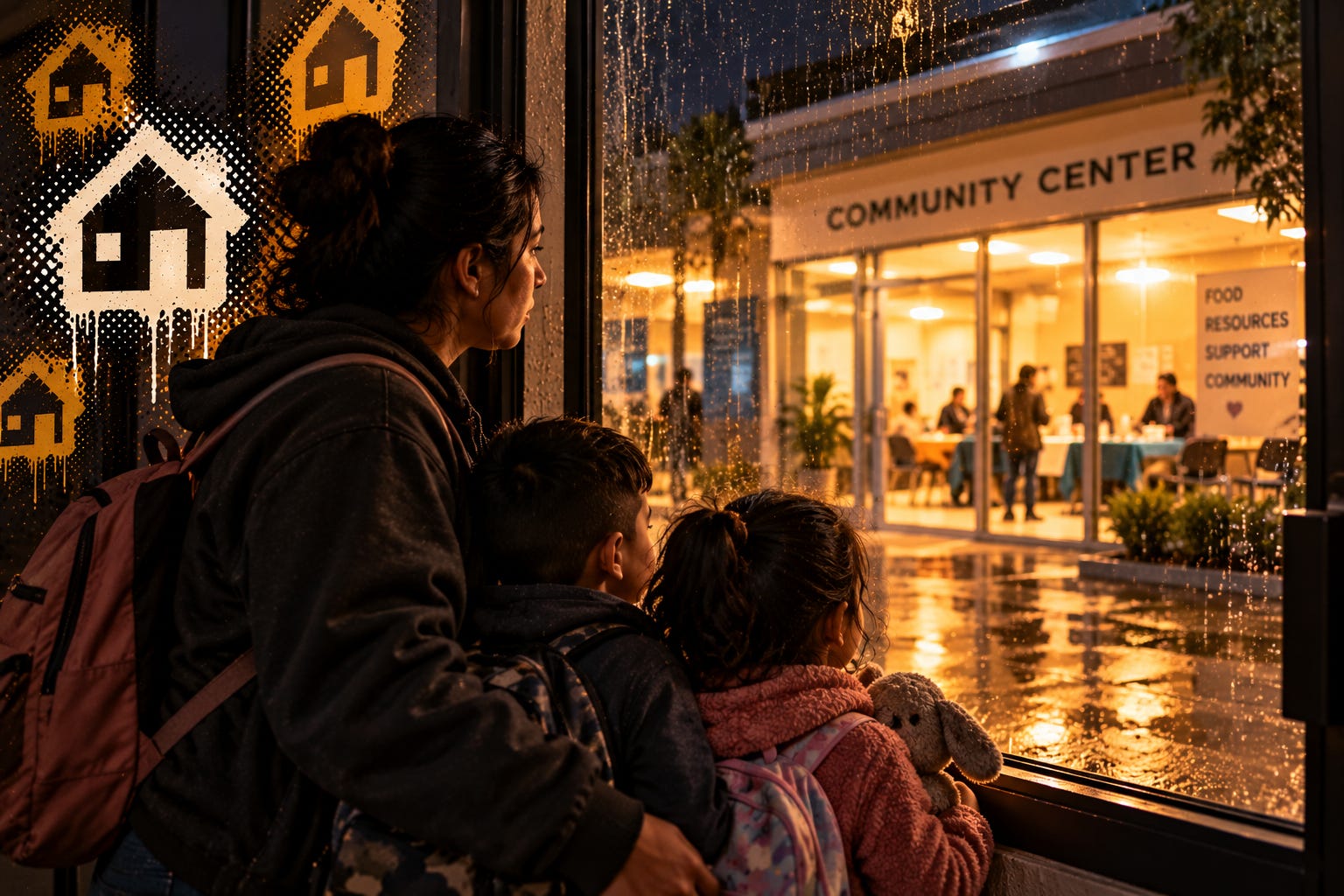
There is a kind of homelessness in Los Angeles that almost never gets counted, reported, or seen, because the families living it are doing everything they can to stay invisible. Immigrant families facing homelessness often will not walk into a shelter, call a hotline, or fill out a housing application, not because help isn’t available, but because they are terrified that asking for help could get someone in their household deported.
IF THIS WORK MATTERS TO YOU, YOU CAN SUPPORT LA CONNEXION DIRECTLY HERE: ☕Support LA Connexion☕
Why Immigrant Families Facing Homelessness Stay Silent
California is home to an estimated 1.1 million children who have at least one undocumented parent. More than half of those children are U.S. citizens, and more than 250,000 are under the age of five, according to reporting from EdSource, republished by The 74. These are mixed-status households: one family member might be a U.S. citizen, another a green card holder, another undocumented, all sharing the same home and the same risk if that home falls apart.
When a mixed-status family loses housing, they face a choice most housed families never have to make. Reach out to a shelter or a public program, and risk a paper trail that could affect someone’s immigration case down the road. Or stay quiet, double up in an already crowded apartment, sleep in a car, or move between relatives’ couches, and disappear from the official homelessness count entirely. Liza Davis, advocacy director at The Children’s Partnership and a former immigration attorney, put it plainly in that same reporting: even when she personally reassures families that a specific program will not affect their immigration status, “sometimes they just still wouldn’t enroll… because the fear is so severe.”
That fear is not irrational or new. It has been building for years around federal “public charge” rules, which allow immigration officials to deny green cards or visas to people considered likely to depend on government assistance. A proposal introduced in November 2025 would repeal a 2022 rule that had at least given families some clarity about which programs counted and which did not. Every time that clarity disappears, families default to the safest assumption in their eyes: say no to everything, even help they legally qualify for, even help their own citizen children qualify for.
The Cost of Staying Hidden
The result is a population of immigrant families facing homelessness who are functionally invisible to the systems built to help them. Home visiting programs, which are often the most trusted way to reach these families because a person shows up rather than asking someone to walk into an office, reached only about 18,200 children in California in the most recent year tracked, according to the National Home Visiting Resource Center, even though researchers estimate more than 2.5 million California children could benefit from that kind of support. The gap between who could be helped and who is actually being reached is enormous, and it is measured in children sleeping somewhere unstable tonight because their parents were too afraid to ask.

This isn’t just a housing problem. It is a trust problem. Families who might otherwise qualify for rental assistance, emergency shelter, or school-based housing support instead choose the riskier, harder path of hidden homelessness because the alternative feels like gambling with a family member’s future in this country. Case workers describe having to spend most of a first conversation just proving that a program is safe, before they can even begin talking about housing.
What Actually Helps Immigrant Families Facing Homelessness
The most effective response experts point to is not a new government program, it is trusted messengers. Home visiting workers, promotoras, faith leaders, and community organizations that families already know and trust are far more effective at connecting mixed-status households to real help than a hotline number or a government website ever will be, because trust is the actual barrier, not lack of awareness.

If you know an immigrant family that may be facing housing instability, the single most useful thing you can do is make the introduction personally, through someone they already trust, rather than just handing them a phone number. LA Connexion’s own community resource guide is built to be shared quietly, one person to another, precisely because that is how families in this situation actually accept help. Legal aid organizations like the Immigrant Legal Resource Center can also help families understand, in plain language, exactly which programs do and do not carry any immigration risk, so fear stops making the decision instead of facts.

📌 You Might Also Be Interested In
They Are Not On the Street: The Hidden Homelessness Crisis in Los Angeles
Why Doesn’t Anyone Tell South LA About These LA Safe Spaces?
How Los Angeles Neighborhoods Are Being Erased One Building at a Time
📌 Community Resources
📍 Immigrant Legal Resource Center
Plain-language guidance on public charge rules and which programs carry no immigration risk
📍 CHIRLA (Coalition for Humane Immigrant Rights)
(213) 353-1333, LA-based support, legal services, and advocacy for immigrant families
📍 211 LA County
Dial 2-1-1, confidential referral line for housing, food, and family support, available in multiple languages
📍 LA Connexion
Our free community resource guide, (323) 200-9096
📌 Join LA Connexion
📞 (323) 200-9096
Stories like this one about immigrant families facing homelessness rarely get told, because the families living it can’t afford to be seen. Support LA Connexion’s work uncovering them by joining us here.
And if your business wants a better relationship with the community it serves, reach out. We can help make that happen: laconnexions23@gmail.com or (323) 200-9096.