


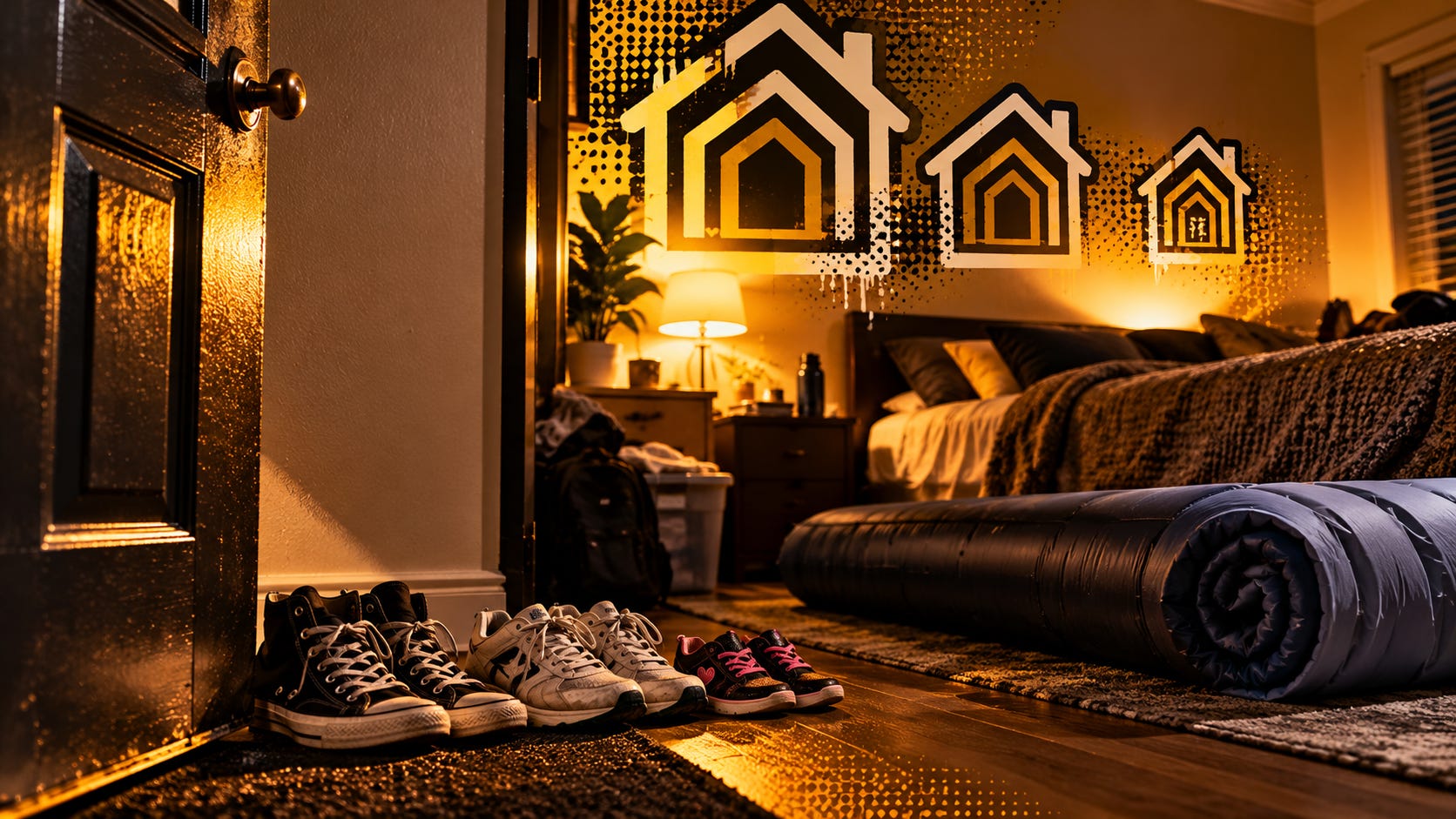
One Bedroom, Three Families, Zero Room to Breathe
Grandma’s house has four bedrooms. Right now it holds three families. Her daughter and two kids in one room, a nephew and his girlfriend in another, a cousin who “just needs a few weeks” sleeping in the converted garage that has stretched into eight months. Nobody on that street would call this house homeless. Everyone inside it knows better.
This is what Los Angeles’s invisible housing crisis actually looks like. Not tents. Not sidewalks. Just too many people, in too little space, with nowhere else to go.
IF THIS WORK MATTERS TO YOU, YOU CAN SUPPORT LA CONNEXION DIRECTLY HERE: ☕Support LA Connexion☕
Why LA’s Invisible Housing Crisis Never Shows Up in the Official Count
Every year, volunteers fan out across Los Angeles for one night to count how many people are homeless. It is called the Point in Time count, and it is the number that decides how much funding the city and county get to fight homelessness. But that count only looks for people in shelters or out on the street. It was never built to find the family packed into a relative’s spare bedroom.
The city’s own 2026 homeless count admitted as much. The official report states plainly that the count “doesn’t include people who are couch surfing or living doubled up with others, people staying in motels on their own dime, or those inside hospitals and jails.” That single sentence is the whole story of the invisible housing crisis. The people living it are not missing by accident. They are excluded by design, because the count was built to measure a different kind of homelessness than the kind happening inside crowded apartments all over the city.
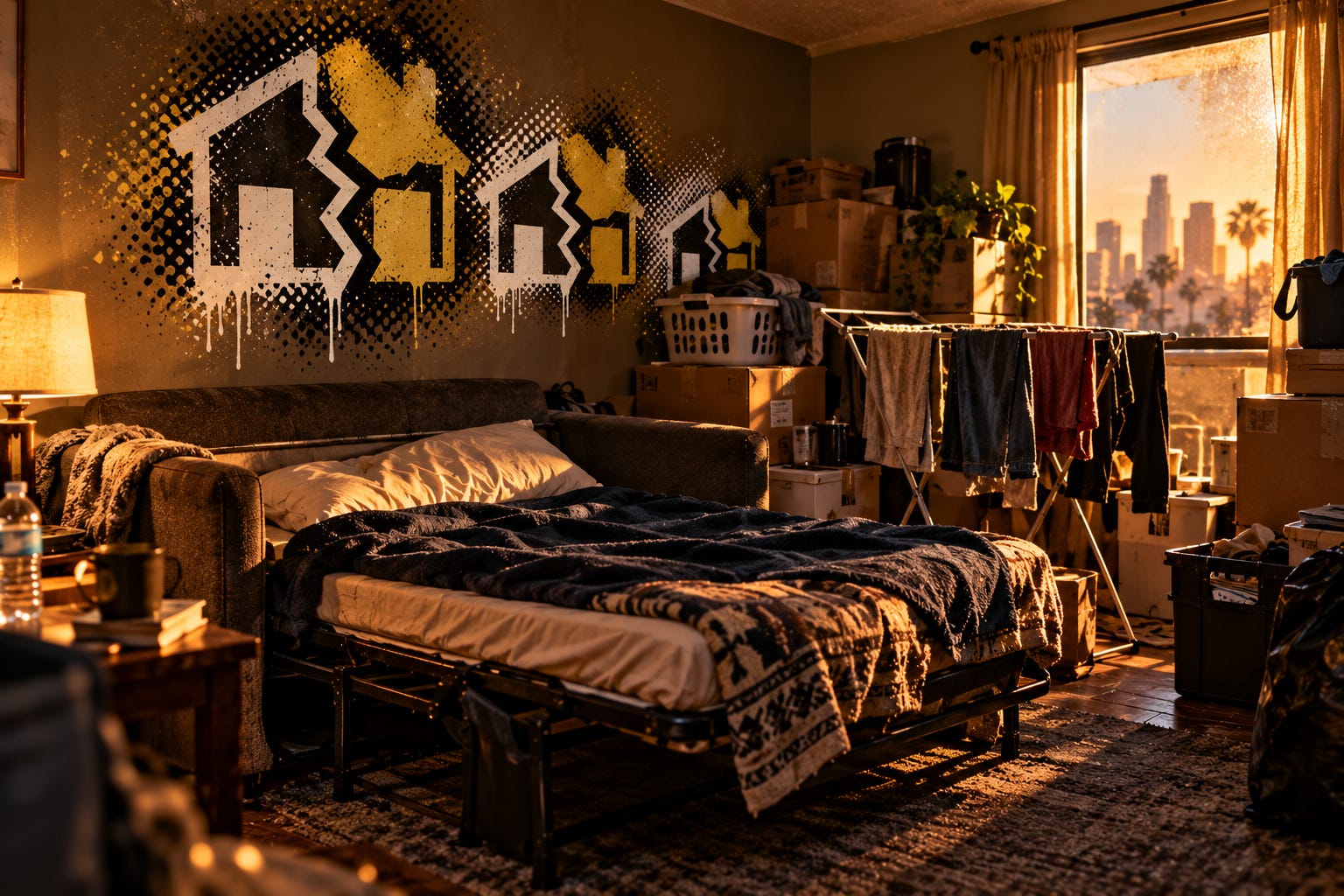
This is not the same thing as a big family choosing to live together. The difference is choice. A multigenerational home that works for everyone is a strength. A doubled-up household is what happens after someone loses their own place and has nowhere left to go but a relative’s couch, garage, or spare room, often with a landlord or lease that never agreed to it. Overcrowding like this brings real consequences: less privacy, more stress, faster spread of illness, and kids who have no quiet place to do homework. Los Angeles County’s own public health data has tracked overcrowded households for years as a measurable health and housing indicator, precisely because the strain is real even when nobody involved is technically unsheltered. Read more in LA homelessness rose in 2026, official count shows from LAist, which lays out exactly how much of the invisible housing crisis the official numbers leave out.
You Can Help Make LA’s Invisible Housing Crisis a Little Less Invisible
You don’t need to solve the housing market to make a real difference here. You just need to help one hidden household get seen.

If you know a household quietly holding three families under one roof, tell them about 211 LA. It costs nothing, it is confidential, and it connects overcrowded and doubled-up families to housing programs, even though they may not think of themselves as “homeless enough” to qualify for help. You can also leave a comment on this article naming what overcrowding looks like in your own neighborhood. Every real comment helps LA Connexion build a resource guide that reflects what is actually happening on the ground, not just what the official numbers say.

📌 You Might Also Be Interested In
They Are Not On the Street: The Hidden Homelessness Crisis in Los Angeles
Why Doesn’t Anyone Tell South LA About These LA Safe Spaces?
How Los Angeles Neighborhoods Are Being Erased One Building at a Time
📌 Community Resources
📍 211 LA
Dial 2-1-1 (free, 24/7, confidential referrals for housing, food, and family support)
📍 LA County Department of Public Health, Center for Health Equity
(213) 288-8000
📍 LAHSA (Los Angeles Homeless Services Authority)
(213) 225-6581
📍 LA Connexion
Our free community resource guide, (323) 200-9096
📌 Join LA Connexion
If you read this and thought of a specific house on a specific street, you already understand LA’s invisible housing crisis better than most policymakers do. LA Connexion exists to turn what neighbors already know into a record the city can’t keep ignoring. Join us, tell us what overcrowding looks like where you live, and help us make the invisible visible.
📞 (323) 200-9096
If this story on LA’s invisible housing crisis hit close to home, know that our paid Substack subscribers are the reason LA Connexion can keep reporting on the households the official count leaves out. Join them here.
And if you own a business in this city, chances are some of your best employees and regulars are living exactly this way right now, three families deep in one home, and would never think to mention it. A community that trusts you starts with being known as a business that doesn’t need a resume to see its own neighbors. If you want to talk about what that could look like, reach out at laconnexions23@gmail.com or (323) 200-9096.