



When “At Least You Have a Couch” Isn’t Enough
Right now, in an apartment somewhere in Los Angeles, a mom is folding a blanket off the couch before her sister’s kids wake up for school. She has a roof over her head tonight. She is also homeless, and almost nobody counts her that way.
This is the part of the homelessness story that never makes the headlines. It does not show up in a tent on the sidewalk. It shows up on a couch, an air mattress, or a floor in a relative’s living room. Researchers now have a name for it: the hidden homelessness crisis, and it is far bigger than most people realize.
IF THIS WORK MATTERS TO YOU, YOU CAN SUPPORT LA CONNEXION DIRECTLY HERE: ☕https://buymeacoffee.com/laconnexion☕
The Hidden Homelessness Crisis by the Numbers
When people picture homelessness, they picture a tent, a shopping cart, or a person sleeping on a sidewalk. That picture is real, but it is only part of the story. A much larger group of people lost their own home and are now staying with someone else, night after night, with no lease, no privacy, and no idea when it will end. Researchers call this being “doubled up,” and it is the biggest piece of the hidden homelessness crisis, because it hides in plain sight. A family sleeping on a relative’s couch does not look homeless to a neighbor or a teacher. Ask them where their own front door is, though, and they cannot tell you.
A researcher at the University of Rhode Island who studies this exact problem found that doubled-up homelessness is typically four to six times larger than what the federal government’s official homeless count captures each year, because that count mostly looks for people in shelters or out on the street.
Los Angeles schools have a front row seat to this problem, because kids cannot hide it from a teacher who notices they wear the same clothes three days in a row or fall asleep at their desk. Student homelessness in LA County jumped nearly 30 percent in a single school year, the sharpest rise in five years.
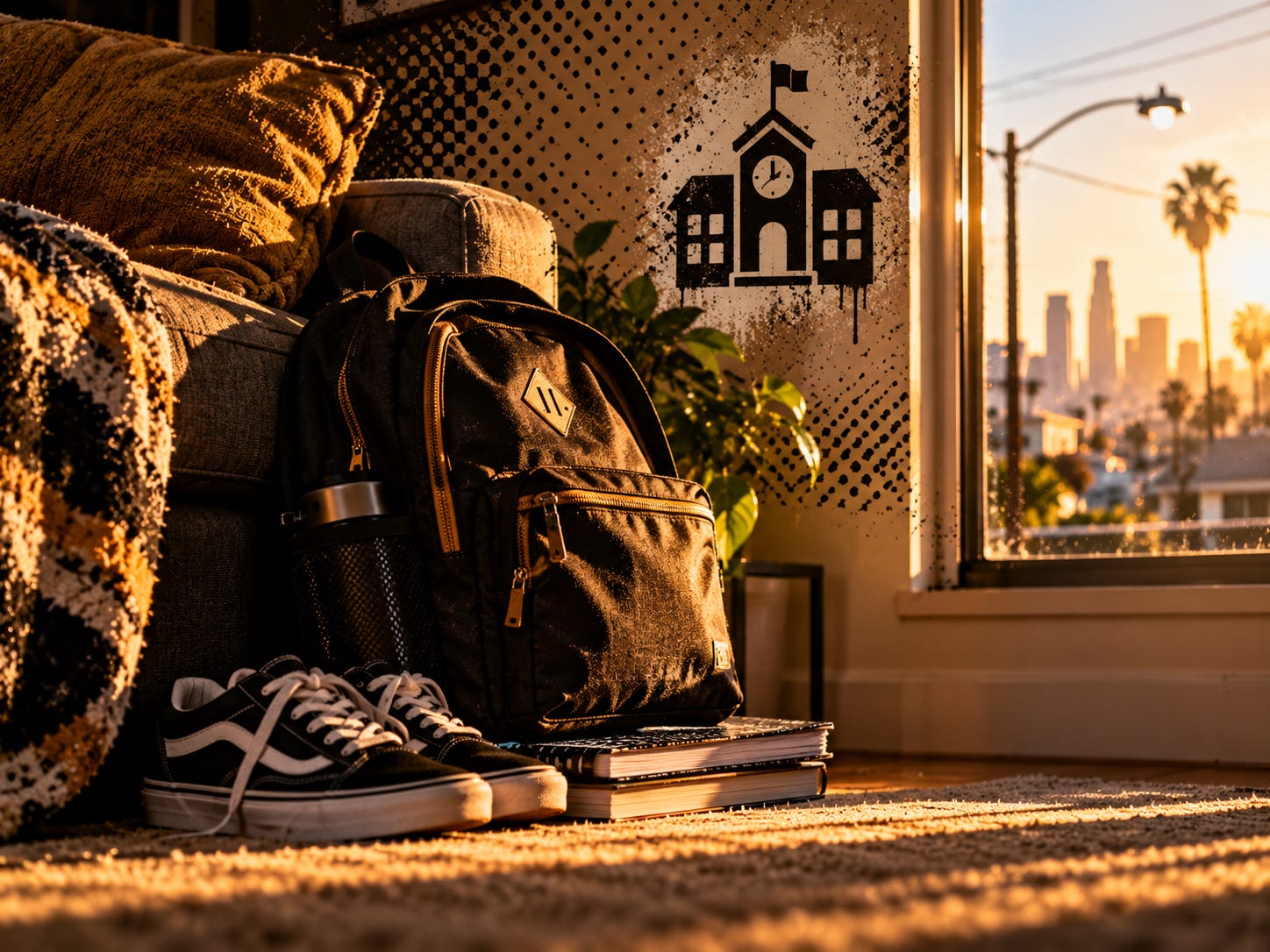
In the Norwalk-La Mirada school district, roughly one out of every three students, about 4,700 kids out of 15,600, was identified as experiencing homelessness. Most of them were not sleeping outside. They were doubled up with family or friends, one more body in an already full apartment. None of those children show up in a Point-in-Time count. They show up in a classroom, quietly falling behind, while the system meant to help homeless families never learns their names.
Some people hear “at least they have somewhere to sleep” and assume the problem is solved. It is not. A couch is not a lease. Families living doubled up can be asked to leave with no notice, because they have no legal right to stay. And because these families are not in a shelter or on the street, they often do not qualify for the very homeless assistance programs built to help them. That is the cruelty hiding inside the hidden homelessness crisis: the safety net is built to find people who are visibly unhoused, and it mostly misses the people who are one relative’s patience away from actually being on the street.
You Can Help Someone Get Counted and Connected
You do not need a title or a budget to make a difference here. The most powerful thing an ordinary person can do is help a hidden family get seen by the systems built to help them.

If you know a family doubled up with relatives, or a young person couch surfing between friends’ houses, encourage them to call 211 in LA County. It is free, it is confidential, and it connects people to housing help, food, and other support, even when they do not look like the picture most people have of “homeless.” If you want to go further, share this article, or leave a comment naming a resource you know works in your neighborhood. Every comment builds LA Connexion’s community resource guide into something more people can actually use.
📌 You Might Also Be Interested In
They Are Not On the Street: The Hidden Homelessness Crisis in Los Angeles
📌 Community Resources
🏠 211 LA — www.211la.org, dial 2-1-1 (free, 24/7, confidential referrals for housing, food, and family support)
🏫 LA County Office of Education, Homeless Education Program — www.lacoe.edu, ask your child’s school office for the McKinney-Vento liaison
📋 LAHSA (Los Angeles Homeless Services Authority) — www.lahsa.org, (213) 225-6581
📞 LA Connexion — LA Connexion’s free community resource guide, www.lacxn.com, (323) 200-9096
📌 Join LA Connexion
If this story named something you have seen but never had words for, you are exactly who LA Connexion was built for. We are a community of neighbors telling the truth about what is really happening in Los Angeles, and connecting each other to real help. Join us, add your voice, and help us find the families the official numbers keep missing.
📧 laconnexions23@gmail.com
📞 (323) 200-9096
🌐 www.lacxn.com
If today’s story on the hidden homelessness crisis moved you, our paid Substack subscribers are the reason LA Connexion can keep tracking stories like this one instead of the headlines everyone else already knows. Join them here: https://lacxn.substack.com/subscribe
And if you run a business in this city, the families in this story are your neighbors and, more often than you’d think, your customers and employees too. A community that trusts you starts with being known as a business that sees them. If you want to talk about what that could look like, reach out at laconnexions23@gmail.com or (323) 200-9096.
LA Coordinated Entry use L-HAT tool. https://www.lahsa.org/documents?id=7849-housing-acuity-index-assessment.pdf This is Thurston County WA https://drive.google.com/file/d/1TFrcfSLWe4ERKc59z2a7EMec2y9OgQrG/view?usp=drivesdk