



Turning 18 Is Supposed to Be the Start of Independence. For Some, It’s the Day Every Safety Net Disappears.
Turning 18 is supposed to be the start of independence. For a young person who has moved through both foster care and the juvenile justice system, it is often the moment every safety net disappears at once. Transition age youth homelessness hits this group especially hard: between one-quarter and one-third of homeless young people have a history of foster care, and research on newly homeless young adults who aged out of foster care has found they are significantly more likely to report a mental health diagnosis than their peers. When juvenile justice involvement gets added on top of a foster care background, a young person can age out with no family to call, a record that makes landlords hesitate, and a mental health need that was never fully addressed by either system.
IF THIS WORK MATTERS TO YOU, YOU CAN SUPPORT LA CONNEXION DIRECTLY HERE: ☕Support LA Connexion☕
A County Office Built Around a Different Idea
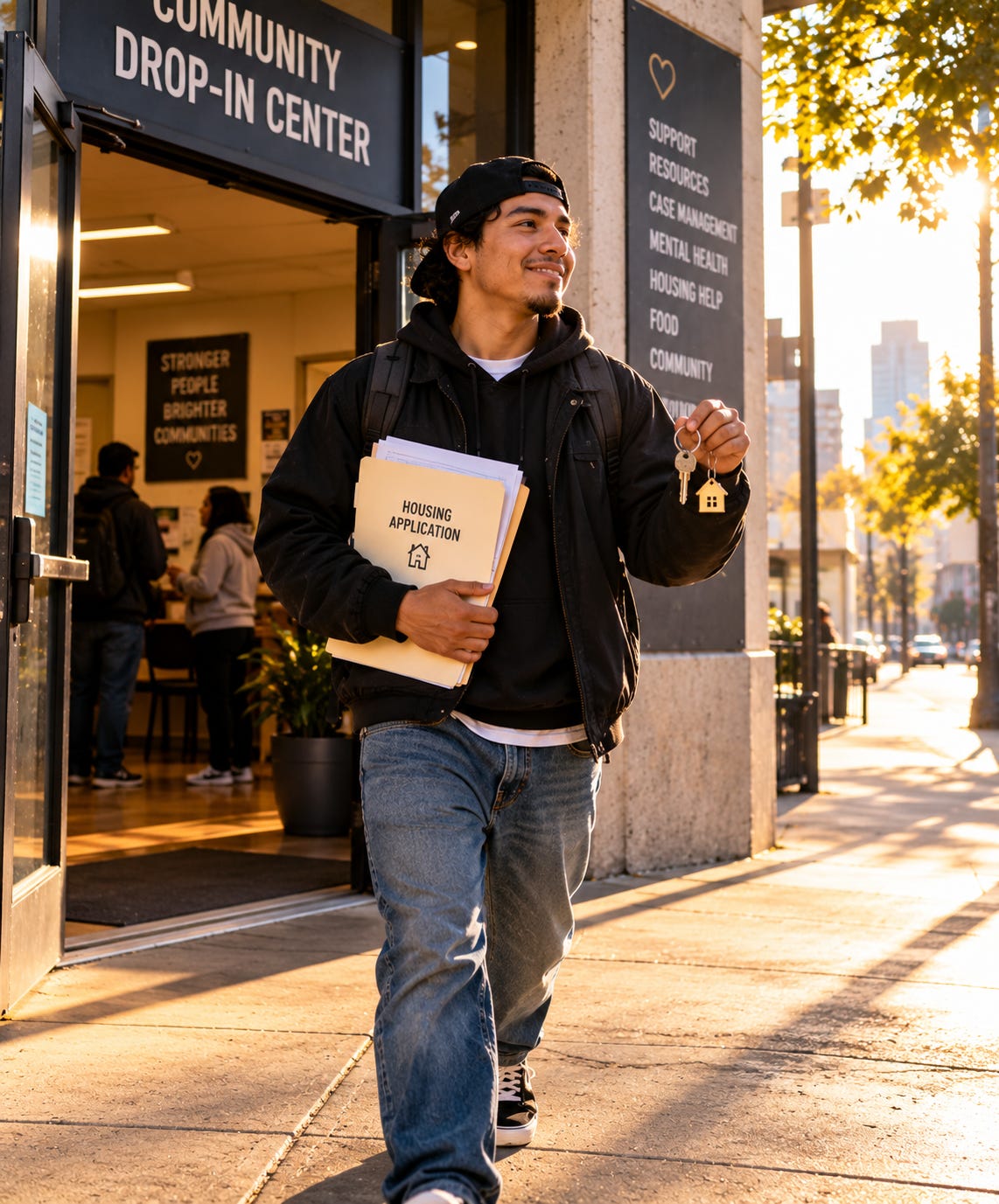
LA County recently launched a new Office of Transition Age Youth inside its Department of Mental Health, led by psychologist Erica Reynoso, specifically to serve young people ages 16 to 25 coming out of foster care and juvenile justice systems. Instead of waiting for a crisis and then offering traditional talk therapy, the office runs ten drop-in centers across the county where young people can get a meal, take a shower, use the internet, and build a relationship with staff who are trained to talk to them without judgment before anything clinical ever comes up. That order matters. Transition age youth homelessness rarely gets solved by a therapy appointment alone if a young person does not have a safe place to sleep that night.

Hiring the People Who Have Actually Lived It
One of the most promising parts of the new office is its plan to hire community health workers who are themselves former foster youth or justice involved young people, trained through a state certification program to work alongside licensed mental health professionals. Reynoso has said the goal is having just as many young people with lived experience working alongside licensed mental health professionals, calling it a major step forward, because trust is often the hardest thing to rebuild for a young person who has been moved through multiple systems and multiple strangers’ offices for years. Transition age youth homelessness is not just a housing gap, it is also a trust gap, and trust does not get rebuilt through paperwork.
In-piece photo prompt: Hyperrealistic photograph of a mixed-race young peer support worker and a Black teenager sitting side by side on a bench outside a community center, both wearing casual clothes, an easy conversation visible in their body language, warm late afternoon light.
How to Actually Help a Young Person Right Now
If you know a young person aging out of foster care, juvenile justice, or both, connecting them to one of the county’s TAY drop-in centers is a low pressure first step that does not require them to already have a plan or be in crisis. They can simply show up. If you are that young person yourself, you do not need paperwork or a referral to walk through the door, and the center’s whole design is built around meeting you exactly where you are right now.

📌 You Might Also Be Interested In
They Are Not On the Street: The Hidden Homelessness Crisis in Los Angeles
Why Doesn’t Anyone Tell South LA About These LA Safe Spaces?
How Los Angeles Neighborhoods Are Being Erased One Building at a Time
📌 Community Resources
📍 LA County DMH Office of Transition Age Youth
Drop-in centers and mental health support for youth ages 16 to 25 from foster care and juvenile justice backgrounds
📍 Penny Lane Centers
Foster care, mental health, and housing support services for youth and families across LA County
📍 National Foster Youth Institute
Advocacy, mentorship, and resources for current and former foster youth nationwide
📍 LA Connexion
Our free community resource guide, (323) 200-9096
📌 Join LA Connexion
Transition age youth homelessness is what happens when two systems hand a young person off at exactly the moment they need the most support. Join LA Connexion and help us keep showing up for them.
📞 (323) 200-9096
Transition age youth homelessness is what happens when two systems hand a young person off at exactly the moment they need the most support. Support LA Connexion’s reporting on stories like this by joining us here.
And if your business wants a better relationship with the community it serves, reach out. We can help make that happen: laconnexions23@gmail.com or (323) 200-9096.