


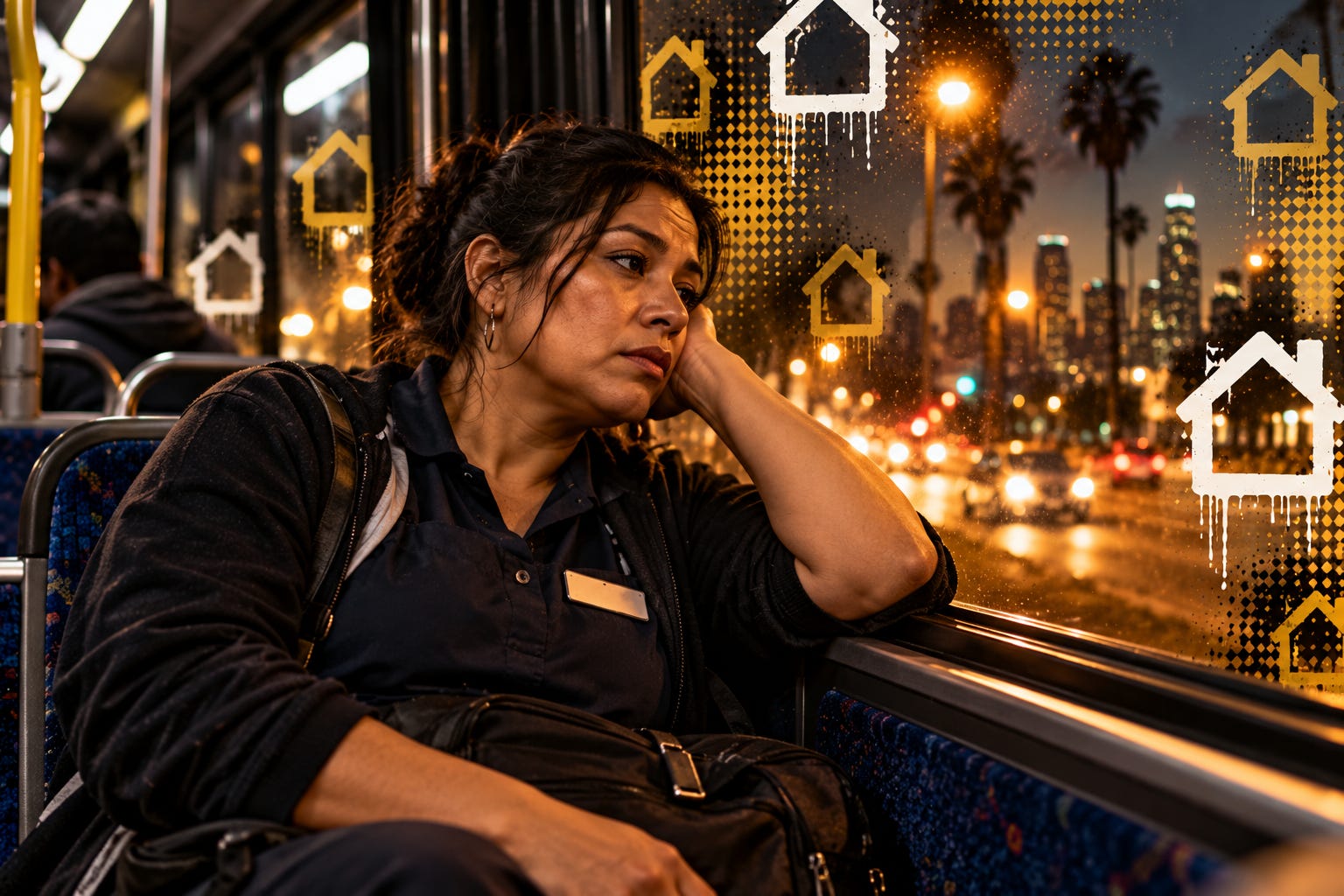
She Clocks a Full Shift, Then Sleeps in a Church Parking Lot
There is a version of homelessness that never makes it into the stereotypes. It looks like a work badge clipped to a shirt, a punch-in time of 6am, and a car in a church parking lot where that same person sleeps at night because rent finally outran the paycheck. Being working but homeless in Los Angeles is far more common than most people realize, and the data behind it should change how this whole city talks about who ends up on the street.
IF THIS WORK MATTERS TO YOU, YOU CAN SUPPORT LA CONNEXION DIRECTLY HERE: ☕Support LA Connexion☕
The Study That Broke the Stereotype
A California Policy Lab study out of UCLA looked at years of records for people entering LA County’s homeless services system and found that 74 percent of working-age adults had some work history in California before they ever enrolled, and 37 percent had worked within the two years before becoming homeless. About one in five, 19 percent, were actively employed in the very same quarter they became homeless.
The average annual earnings for this group were just under $9,970, only about 16 percent of LA’s median income. UCLA economist Till von Wachter, who worked on the research, put it plainly: “There’s often an assumption that people experiencing homelessness are not working.” Most of these are stories about one bad month, a car repair, a medical bill, a rent hike, not a story about not trying.
One Emergency Away, Every Single Month
In a city where median rent can eat more than half of a full-time minimum wage income, there is almost no financial cushion left over for anything unexpected. A transmission repair. A missed shift because a child got sick. A landlord raising rent by $200 a month. Any one of these can be the difference between staying housed and sleeping in a car parked a few blocks from the job someone still shows up to every single day.
This is the quiet, exhausting math that so many working but homeless Angelenos do constantly: working full shifts, then driving to find a safe place to park, then waking up early enough to look presentable for the next shift, all while trying to save enough to get back into an apartment.

What Actually Moves People Back Into Housing
The research found something encouraging buried in the hard numbers: employment rates tend to increase after people connect with homeless services, especially for those who were recently employed before losing housing. That means outreach programs that combine job support with housing search, rather than treating them as two separate problems, are working.

If you are an employer reading this, the most practical thing you can do is ask your HR team whether your company partners with a local workforce program like WorkSource LA or Chrysalis, both of which specifically help people rebuild stability while working. If you are a coworker, sometimes the simplest form of support is not judgment when someone seems tired or guarded about where they live, it is pointing them toward LA Connexion’s free community resource guide, which lists local housing and workforce support side by side.

📌 You Might Also Be Interested In
They Are Not On the Street: The Hidden Homelessness Crisis in Los Angeles
Why Doesn’t Anyone Tell South LA About These LA Safe Spaces?
How Los Angeles Neighborhoods Are Being Erased One Building at a Time
📌 Community Resources
📍 WorkSource LA / America’s Job Center of California
(213) 744-7200, free job placement and career services
📍 Chrysalis
(213) 806-6800, employment services specifically for people experiencing homelessness
📍 HOPICS
(323) 235-4600, coordinated entry into LA County’s homeless services system
📍 211 LA
Dial 2-1-1, free 24/7 referral line for housing, food, and job resources
📍 LA Connexion
Our free community resource guide, (323) 200-9096
📌 Join LA Connexion
Someone you work beside every day might be living this story right now. Join LA Connexion and help us make sure they are seen, not judged.
📞 (323) 200-9096
If stories like this matter to you, consider joining LA Connexion’s paid Substack and help us keep reporting on the working neighbors this city too often overlooks. Join here.
And if your business wants a better relationship with the community it serves, including the workforce it depends on every day, reach out. We can help make that happen: laconnexions23@gmail.com or (323) 200-9096.